Land for Sale in Rwanda: Best Plots, Prices & How to Buy 2026

Land for Sale in Rwanda: Best Plots, Prices & How to Buy in 2026
If you are searching for land for sale in Rwanda, you have chosen one of the most strategically sound investments available in East Africa today. Land is finite, Kigali is growing at 2.7% per year according to the World Bank's Rwanda Country Overview, and Rwanda's government is actively investing in roads, utilities and urban infrastructure that push land values upward across the city and beyond. Whether you want a residential plot to build your family home, a commercial site to develop for income, agricultural land outside Kigali, or a strategic plot to hold as a long-term investment, this guide covers everything you need to make the right decision in 2026.
The challenge is not a shortage of land for sale in Rwanda. The challenge is knowing which zones are growing, which plots have clean titles, what the zoning rules permit you to build, and how to navigate the legal purchase process without exposing yourself to the risks that catch unprepared buyers. At Kwanda Real Estate, Rwanda's leading licensed property agency, we have guided hundreds of buyers through exactly this process and this guide puts that expertise directly in your hands.
By the end of this article you will know the best locations for land for sale in Rwanda in 2026, realistic prices by zone, the full legal purchase process step by step, zoning rules that determine what you can build, and the due diligence checklist that separates successful buyers from those who end up in disputes. Let us begin.
1. Why Buying Land in Rwanda Is One of Africa's Smartest Investments in 2026
Rwanda's land market is driven by fundamentals that very few African countries can match simultaneously: political stability, a single-party government with a clear 30-year development vision, digital land title verification that reduces fraud, and infrastructure investment that is physically creating value in zones that were farmland five years ago.
According to the International Monetary Fund's Rwanda country data, Rwanda's GDP grew at 8.2% in 2023 one of the highest rates on the African continent. This economic momentum translates directly into land demand: more households with rising incomes need more housing, more businesses need commercial space, and more logistics operators need industrial land. The result is consistent, multi-year appreciation in well-located plots across Kigali and emerging secondary markets.
Land Banking: Rwanda's Most Powerful Wealth-Building Strategy
Land banking buying well-located plots before infrastructure reaches them has outperformed virtually every other asset class in Rwanda over the past decade. The mechanism is simple: the government announces a BRT route, a new road or a Special Economic Zone. Plots along that corridor rise 10–30% in value before construction even begins, as buyers price in future connectivity. Buyers who entered Rusororo five years ago before the SEZ expansion began have recorded gains that no savings account or equity market could match.
Kigali's Bus Rapid Transit network, the new Bugesera International Airport and the road expansion programme are each creating new value corridors right now. Read Kwanda's dedicated guide on land banking in Rwanda for long-term gains for a full zone-by-zone analysis of where land banking delivers the strongest returns in 2026.
What Makes Rwanda's Land Market Unique in East Africa
Rwanda stands apart from its East African neighbours in one critical way: a functioning digital land registry. The Rwanda Land Management and Use Authority (RLMUA) operates a national online Land Portal where every registered title can be verified by parcel number before a single franc changes hands. This dramatically reduces though does not eliminate the fraud risk that plagues land markets in neighbouring countries where paper titles can be forged or duplicated. For buyers, it means you can verify ownership before committing, which is a level of transparency that distinguishes Rwanda from most African markets.
Rwanda's Investment Code provides equal legal standing for foreign and local buyers, permits free repatriation of proceeds on resale, and protects registered landholders from arbitrary government appropriation without compensation. These are not paper guarantees they are enforced by a government that actively courts foreign investment and understands that property rights are the foundation of that relationship.
2. Understanding Rwanda's Land Tenure and Zoning System
Before searching for land for sale in Rwanda, you need to understand two things that no other guide will tell you clearly enough: tenure type and zoning designation. Getting either of these wrong is an expensive mistake.
Freehold vs Leasehold: What Rwandan Land Title Actually Means
Rwanda operates a leasehold system. The Rwandan state retains ultimate ownership of all land; individuals and companies purchase the right to use, develop, sell, mortgage and inherit land for a defined term. For Rwandan citizens, this term is effectively perpetual through renewable 99-year leases. For foreign nationals, the maximum term is 99 years renewable and legally protected under the Organic Land Law. In practice, a registered 99-year leasehold through the RLMUA carries the same practical legal weight as freehold in most jurisdictions: you can sell it, borrow against it, leave it to your heirs and develop it as you choose within zoning limits. Read Kwanda's explainer on why Rwanda's leasehold system is more secure than you think for the full legal analysis.
Kigali's Zoning System: R1 Through R4 Explained
Kigali's residential and mixed-use land is divided into four density zones that strictly define what can be built on each parcel. Buying land in the wrong zone for your intended use can leave you unable to develop as planned and there is no guaranteed path to rezoning.
R1 — Low Density: Minimum plot size typically 600+ sqm. Single-family detached houses, maximum 2 storeys. Large gardens, setbacks from boundaries. Found in Kinyinya, parts of Nyarutarama, Rebero hillside. Ideal for spacious family homes and privacy-seeking buyers.
R2 — Medium-Low Density: Plots from 300 sqm. Single and semi-detached houses, small apartment blocks up to 3 storeys. Found in Gacuriro, Rusororo, Kimironko, Kabeza. The most versatile residential zone for most buyers.
R3 — Medium Density: Apartment blocks up to 4 storeys, row houses, higher plot coverage. Found in Kibagabaga, Gisozi, parts of Remera. Best for buy-to-let apartment developers targeting the growing professional class.
R4 — High Density / Mixed Use: Apartment towers up to 8+ storeys, commercial ground floors, maximum plot utilisation. Found in Kacyiru, Kimihurura edges, CBD perimeter. For commercial developers and large-scale residential projects.
For full guidance on what each zone permits setbacks, heights, plot coverage ratios read Kwanda's zoning guides: what you can build in R1 and R2 zones and a deep dive into R3 and R4 zones. Also read Kwanda's guide on land use and zoning laws in Rwanda for investors.
3. Best Locations for Land for Sale in Rwanda in 2026
Location is the primary determinant of land value not plot size, not finishes, not seller asking price. The same 400 sqm plot in Bumbogo and in Kimihurura can differ by a factor of 10 in price. Here is Kwanda's zone-by-zone analysis of where to buy land in Rwanda in 2026, organised by investment profile.
Gasabo District: The Growth Engine of Kigali
Bumbogo: Bumbogo delivers the best value per square metre of any gazetted Kigali zone in 2026. Plots here are large (400–800 sqm typical), prices remain accessible (RWF 20M–45M for a 400 sqm plot), and infrastructure investment is gradually improving connectivity. For buyers with a 5–10 year horizon, Bumbogo offers the most compelling risk/return profile in the land market. Browse spacious land for sale in Bumbogo and land for sale in Bumbogo Gasabo currently listed by Kwanda.
Rusororo: Rusororo is Kigali's fastest-growing residential zone, driven by Special Economic Zone proximity, improving road connections and a wave of new construction activity. Plots here range from RWF 30M–70M for 300–500 sqm. Buyers who entered 3–5 years ago captured strong appreciation; the opportunity remains for buyers entering ahead of BRT connection. View a main road Rusororo plot for sale, a 373sqm prime residential plot in Rusororo and spacious Rusororo land for sale.
Kinyinya: Kinyinya's hillside topography creates panoramic views of Kigali's seven hills and a quiet, R1-zoned residential character. Plots here (400–700 sqm) range from RWF 55M–100M depending on view angle and road frontage. The zone is popular with returning diaspora and executive owner-occupiers who want space and privacy at prices well below Nyarutarama. See prime land for sale in Kinyinya, land for sale in Kinyinya and spacious prime land in Kinyinya.
Gacuriro: A solid mid-market choice popular with young professionals and civil servants. R2 zoning, improving connectivity, strong organic demand. Plots from RWF 40M–75M. See land for sale in Gacuriro.
Kicukiro District: Southern Value and Logistics
Rebero: Rebero offers dramatic city views from its hilltop position and is experiencing rapid development as Kigali expands southward. Plots of 300–600 sqm range from RWF 70M–180M depending on view and road access. See prime land for sale in Rebero, spacious prime land in Rebero and a large plot of land in Rebero with city views.
Kanombe: Airport-adjacent, strong logistics demand, residential values well below comparable Gasabo zones. Excellent for buyers prioritising accessibility and buy-to-let potential near the new Bugesera Airport corridor.
Prime Zones: Nyarutarama, Kimihurura, Kacyiru
These are Kigali's most prestigious land addresses and command premium pricing: RWF 150M–500M+ for 400–600 sqm plots. Liquidity is exceptional well-priced plots in these zones rarely sit on the market more than a few weeks. See a Nyarutarama spacious plot for sale, Kimihurura prime plot for sale and Kacyiru spacious plot for sale.
Beyond Kigali: Bugesera, Muhazi and Agricultural Land
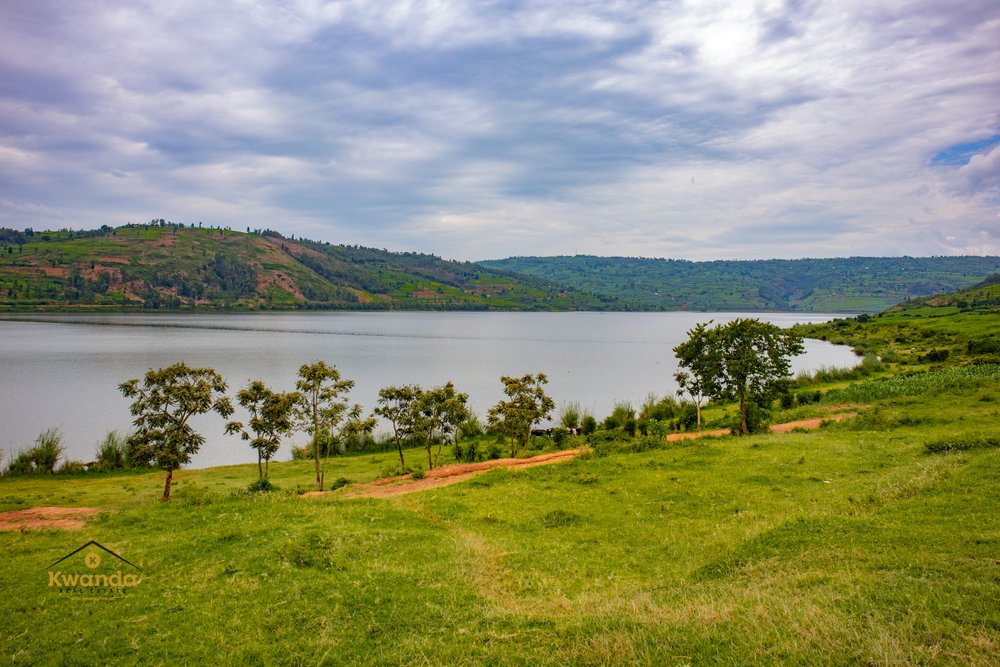
For buyers seeking larger land areas at lower prices for agricultural use, resort development, or long-term land banking outside the city Bugesera District and the Lake Muhazi corridor offer compelling options. The new Bugesera International Airport is dramatically improving connectivity and pushing values upward in the district. Kwanda lists a 2-hectare land for sale in Bugesera, a large farm land for sale in Bugesera, beautiful spacious property on Lake Muhazi and 12 hectares for sale on Lake Kivu — each representing a distinct investment thesis.
4. Land Prices in Rwanda: What to Budget by Zone in 2026
The following price ranges are indicative Q1 2026 market estimates based on Kwanda's active transaction data and listing analysis. Always request a formal independent valuation before making any offer prices vary significantly by road frontage, infrastructure quality, slope, view and plot shape within the same zone.
|
Zone / Location |
Plot Size (sqm) |
Price Range (RWF) |
Best For |
|
Bumbogo |
300–500 |
RWF 20M–45M |
Value investors |
|
Rusororo |
300–500 |
RWF 30M–70M |
Growth buyers |
|
Kinyinya |
400–700 |
RWF 55M–100M |
Diaspora / homes |
|
Gacuriro |
300–500 |
RWF 40M–75M |
Mid-market homes |
|
Rebero |
300–600 |
RWF 70M–180M |
Views / prestige |
|
Kimironko |
300–500 |
RWF 55M–100M |
Established suburb |
|
Nyarutarama |
400–700 |
RWF 200M–500M+ |
Prime / luxury |
|
Kimihurura |
400–600 |
RWF 180M–400M |
Expat / diplomatic |
|
Kacyiru |
400–700 |
RWF 150M–350M |
Government zone |
|
Bugesera (district) |
1,000–20,000+ |
RWF 5M–80M |
Agriculture / resort |
All prices are indicative Q1 2026 estimates. Verify current rates with a licensed valuer before making any offer.
5. Types of Land for Sale in Rwanda: Choosing the Right Category
Residential Plots: The most actively traded category in Kigali. Suitable for building family homes, investment houses for rental, and off-plan sale. Zoning (R1–R4) determines density and building height. Browse Kwanda's full residential plot listings.
Commercial Land: Plots designated for retail, office, hospitality or mixed-use development. Command premium pricing in established commercial zones (Kimihurura, Kacyiru, CBD perimeter, Kagugu). See commercial land listed on Kwanda.
Light Industrial Land: Masaka, Busanza and Kanombe offer light industrial zoning — ideal for warehousing, logistics and light manufacturing. Strong demand driven by Kigali's growing trade and logistics sector. See an extensive light industrial property for sale in Masaka.
Agricultural Land: Available in Bugesera, Eastern Province, Kayonza and beyond. Prices per hectare vary widely by soil quality, water access and proximity to major roads. Agricultural buyers must confirm land use designation — not all rural land is cleared for commercial farming.
Lakeside and Tourism Land: Lake Kivu, Lake Muhazi and Lake Cyohoha plots command significant premiums for tourism and hospitality development. The Rwanda Development Board actively promotes tourism investment and offers incentives for qualifying projects. See 12 hectares for sale on Lake Kivu and spacious Lake Cyohoha plot for sale.
According to the Rwanda Housing Authority, Rwanda's Vision 2050 targets a significant increase in urban housing density meaning the most valuable land going forward will be that which permits multi-unit residential development (R3 and R4 zones) in well-connected locations.
6. How to Buy Land for Sale in Rwanda: The Complete Legal Process
Rwanda's land purchase process is well-structured by East African standards, but it is not forgiving of shortcuts. Every step below is mandatory. Skipping any one of them creates legal risk that can take years and significant expense to unwind.
1. Define Your Brief Precisely: Set your maximum price, intended use, required zone, preferred location, minimum plot size and timeline before viewing anything. Buyers who skip this step make emotional decisions.
2. Engage a Licensed Real Estate Agent: A licensed agent provides accurate market valuations, access to off-market plots, negotiation expertise and title deed verification assistance. Read why hiring a Kigali real estate agent pays for itself.
3. Search, Shortlist and Visit Every Plot: Never buy land you have not physically walked. During visits assess: road access type (tarmac vs murram vs footpath), electricity connection, water access, drainage, slope/gradient, boundary markers and neighbouring uses.
4. Verify the Title Deed on the RLMUA Land Portal: This step is non-negotiable and must happen before any deposit is paid. Confirm: parcel number matches the physical plot, registered owner matches the seller's ID, land use zone matches your intended use, no encumbrances or mortgages on the title. Read Kwanda's guide on why title deeds matter.
5. Obtain a Zoning Certificate: Request a written zoning confirmation from the City of Kigali confirming the plot's designated zone and permitted uses before signing any agreement. Your agent or notary will assist with this.
6. Negotiate Price and Sign a Memorandum of Understanding (MOU): Your agent negotiates the purchase price. A signed MOU records the agreed price, payment timeline and conditions of sale. A deposit of 5–10% of the purchase price is typically paid at this stage. Never pay a deposit without a signed, witnessed MOU.
7. Notarise the Sale Deed: Rwandan law requires every land transfer to be executed before a licensed notary. Both buyer and seller must be present or represented by a notarised Power of Attorney. The notary verifies identities, confirms the title deed and executes the deed of transfer. Read about the role of a notary in Rwanda property transactions.
8. Transfer Full Payment by Bank: All land payments must be made by traceable bank transfer. Cash above RWF 1 million is not recognised as valid legal consideration under Rwandan law.
9. RLMUA Title Deed Transfer and Registration: Following notarisation, the title deed is transferred at RLMUA and registered in your name. This step legally completes your ownership. Allow 2–4 weeks for the transfer to reflect on the Land Portal.
For the complete step-by-step buying process with detailed explanations, read Kwanda's step-by-step guide to buying property in Kigali. For foreign buyers, also read how foreigners can safely buy land in Rwanda.
7. Full Cost Breakdown: Taxes, Fees and Hidden Charges for Land Buyers
Many buyers focus on the listed price and are surprised at closing by additional costs that can total 5–8% of the purchase price. Budget for every item below before you negotiate your purchase price.
• Transfer Tax: 0% on the first RWF 10M of the purchase price, then 5% on the amount above. On a RWF 60M plot purchase, this means approximately RWF 2.5M in transfer tax. Always budget for this before you make an offer.
• Notary Fees: 0.5%–1% of the purchase price. Regulated by the Rwanda Bar Association. On a RWF 60M purchase, budget RWF 300,000–600,000.
• RLMUA Title Transfer Fee: A fixed administrative fee charged by the RLMUA to process the title deed transfer. Confirm the current rate with your notary before closing.
• Agent Commission: 2–5% of the purchase price. In most Rwandan transactions this is paid by the seller. Confirm this arrangement in writing before proceeding.
• Land Valuation Fee: RWF 100,000–300,000 for an independent professional valuation. This is advisable before any purchase above RWF 30M. Request your free property valuation through Kwanda.
• Legal Advisory Fee: RWF 200,000–500,000 if you engage a separate property lawyer in addition to the notary. Recommended for complex transactions, foreign buyers and commercial land deals.
• Zoning Certificate: A small administrative fee to the City of Kigali. Confirm current rate at the time of purchase.
For a complete analysis including worked examples, read Kwanda's guide to taxes, fees and hidden costs for buyers in Rwanda.
8. Buying Land in Rwanda as a Foreigner or Diaspora Member
Rwanda is one of the most accessible land markets in Africa for foreign nationals. According to the Rwanda Development Board, foreign investors are guaranteed equal legal standing with Rwandan nationals in all property transactions, and the Investment Code permits full repatriation of sale proceeds without restriction.
Foreign nationals can purchase all categories of land in Rwanda and hold leasehold title of up to 99 years renewable and carrying full legal protection. The purchase process is identical to that for Rwandan nationals, with two additions: a valid passport replaces the national ID at all stages, and all payments must be made by traceable bank transfer (international forex transfers into Rwanda are fully permitted).
Diaspora buyers who cannot be physically present for notarisation can authorise a trusted representative through a notarised and apostilled Power of Attorney. The PoA must be executed in your country of residence and apostilled for international use before your representative can sign documents in Rwanda on your behalf. Kwanda's team assists diaspora clients with this process regularly.
Read Kwanda's full diaspora and foreign buyer guides: how foreigners can safely buy land in Rwanda, how Rwanda protects foreign land buyers, and investing in Rwandan real estate from the diaspora.
9. Key Takeaways
• Land for sale in Rwanda offers the strongest capital appreciation of any property type in Kigali's growth corridors Rusororo, Bumbogo, Kinyinya and Rebero lead the value-for-money rankings in 2026.
• Always verify the title deed on the RLMUA Land Portal before any deposit is paid parcel number, registered owner, land use zone and absence of encumbrances.
• Confirm the zoning designation (R1–R4 or commercial/industrial) before signing anything it determines exactly what you can build and how many units.
• Transfer tax is 0% on the first RWF 10M, then 5% above always budget for this before negotiating your purchase price.
• Foreign buyers and diaspora can purchase land and hold 99-year registered leasehold title with the same legal protections as Rwandan nationals.
• Never pay any deposit without a signed Memorandum of Understanding verbal agreements have no legal standing in Rwandan property law.
• Infrastructure trajectory BRT routes, new roads, SEZ expansion is the single most powerful driver of land value appreciation. Buy ahead of completion, not after.
• Rwanda's GDP grew 8.2% in 2023 (IMF), urban population is growing at 2.7% per year (World Bank), and the government's Vision 2050 plan ensures sustained infrastructure investment for decades to come.
Frequently Asked Questions
Q: How much does land for sale in Rwanda cost in 2026?
A: Land prices vary significantly by zone. Budget RWF 20M–45M for a 300–400 sqm plot in Bumbogo; RWF 30M–70M in Rusororo; RWF 55M–100M in Kinyinya; RWF 70M–180M in Rebero; and RWF 150M–500M+ in Nyarutarama and Kimihurura. Bugesera district agricultural land starts from RWF 5M per hectare for large parcels. Always request a formal independent valuation before making any offer road frontage, infrastructure quality and plot shape all affect value within the same zone.
Q: Can foreigners buy land for sale in Rwanda?
A: Yes. Foreign nationals may purchase all categories of land in Rwanda and hold leasehold title of up to 99 years, with the same legal protections as Rwandan nationals. The process is identical to that for locals. Diaspora buyers can complete transactions remotely using a notarised Power of Attorney. Full guide: how foreigners can safely buy land in Rwanda.
Q: What is the best zone to buy land in Kigali in 2026?
A: It depends entirely on your goal. For best value per sqm: Bumbogo. For strongest growth trajectory: Rusororo. For privacy and hillside views: Kinyinya. For mid-market family plots: Gacuriro. For prestige and liquidity: Nyarutarama and Kimihurura. Contact Kwanda for a personalised recommendation based on your budget and intended use.
Q: How do I verify a land title deed in Rwanda?
A: Verify the title deed on the Rwanda Land Management and Use Authority (RLMUA) Land Portal before any deposit is paid. Confirm the parcel number matches the physical plot, the registered owner matches the seller's identity document, the land use zone matches your intended use, and the title is free of encumbrances or mortgages. Your licensed agent and notary will assist, but you should understand what you are checking. Read Kwanda's guide on why title deeds matter.
Q: What is land banking in Rwanda and is it a good investment?
A: Land banking is purchasing well-located plots before infrastructure reaches them BRT corridors, new roads, SEZ expansions to capture appreciation when construction is complete. Buyers who entered Rusororo ahead of SEZ growth and Kinyinya ahead of road improvements have recorded strong multi-year returns. The risk is timing: infrastructure delays extend the holding period. Mitigate by choosing zones with confirmed (not speculative) government investment. Read Kwanda's full guide on land banking in Rwanda.
Q: What zoning rules apply to residential land for sale in Rwanda?
A: Kigali's residential land is divided into four zones. R1 (low density): single-family houses, large plots, maximum 2 storeys. R2 (medium-low): single and semi-detached houses, small apartments, up to 3 storeys. R3 (medium): apartment blocks up to 4 storeys. R4 (high density/mixed use): towers, commercial ground floors, 8+ storeys. Always confirm the zone before purchase it determines exactly what you can build and whether your intended use is permitted.
Q: How long does buying land in Rwanda take from start to title deed?
A: A straightforward land purchase in Rwanda typically takes 4–8 weeks from signed MOU to title deed registration. The main causes of delay are incomplete seller documentation (missing tax clearances, unresolved encumbrances), zoning queries and bank transfer processing times. Engaging your notary early and using a licensed agent to manage documentation significantly reduces this timeline.
Conclusion: Start Your Search for Land for Sale in Rwanda Today
The market for land for sale in Rwanda in 2026 rewards buyers who understand what they are buying, verify it properly and act decisively on well-researched information. The fundamentals economic growth, urban population expansion, government infrastructure investment and a transparent legal framework are more compelling today than at any point in Rwanda's recent history. Waiting has consistently cost buyers more than acting on good advice.
The key disciplines are simple: verify the title deed on the RLMUA portal before any payment, confirm the zoning designation matches your intended use, budget for all transaction costs above the purchase price, and never sign any agreement without a licensed agent or notary by your side.
At Kwanda Real Estate, we specialise in matching local, diaspora and international buyers to the right land for sale in Rwanda at the right price, in the right zone, with complete legal protection from first viewing to title deed registration. Our team covers every district from Bumbogo to Nyarutarama, every land category from residential plots to lakeside resort land, and every buyer profile from first-time purchasers to multi-site investors.
Browse all plots of land for sale | Request a free land valuation